Major Climate Controls
Structure of the atmosphere - The Atmosphere is divided into layers according to major changes in temperature. Gravity pushes the layers of air down on the earth's surface. This push is called air pressure. 99% of the total mass of the atmosphere is below 32 kilometers. These layers can be remembered by the phrase T SMall TeaM - Troposphere, Stratosphere, Mesosphere, Thermosphere and Magnetosphere. Take an index card and write three facts on each sphere.
Atmospheric Heat Budget - admittedly it looks like a very young kids website, but a very good summary is shown here. Once again draw the model and add three facts to your next index card.
General Atmospheric Circulation - Atmospheric circulation is the large-scale movement of air, and the means (together with the smaller ocean circulation) by which thermal energy is distributed on the surface of the Earth. There are four cell models to remember - one helps to explain El Nino (the Christ Child).
Planetary Surface Winds - what is worse than farting in a lift - here is an animation that explains it better than I can.
Ocean Circulation - If the Earth was a house, the sun and the winds are like the hot air fans of the central heating system, but the oceans are like the radiators or the storage heaters. Here is a summary with a diagram of the ocean currents.
Altitude - as in the vertical height or elevation above or below sea level. But it does affect the weather, once again read through the article and and make notes.
What is the difference between climate and weather?
The difference between weather and climate is a measure of time. Weather is what conditions of the atmosphere are over a short period of time, and climate is how the atmosphere "behaves" over relatively long periods of time. (article found here).
Climate of Britain
Basic Climate Characteristics of the British Isles A quick glance if you can't be bothered can be found here or here. But for an in depth guide, have a look here.
The climate of Great Britain is temperate and equitable. The prevailing winds are south- westerly and the climate is largely determined by that of the eastern Atlantic, although during the winter months easterly winds may bring a cold, dry, continental type of weather. The average range of temperature between winter and summer varies from 7' to 12'C, being highest inland in the eastern part of England.
During a normal summer the temperature occasionally rises above 27'C; winter temperatures
below -7'C are rare. Sunshine decreases from north to south. The average summer (April -
September) potential evapotranspiration ranges from about 230mm in the Scottish highlands to
500mm in East Anglia.
The average annual rainfall over Great Britain is about 1,080 mm, ranging from over 4,000 mm in
a few points in the hills of Wales, Northern Ireland and Scotland to 500 mm in parts of East
Anglia. (Source)
Bored - have a look here
Air Masses that affect the British Isles
Origin and nature of depressions
Origin and nature of anticyclones
Storm Events
Thursday, 10 June 2010


Thursday, 3 June 2010
Plate Tectonics and Associated Hazards Part Two
So, hopefully you have got through the first part, so onto the second section...of the first part in part two.
Destructive, constructive and conservative plate margins. Processes: seismicity and vulcanicity.
Associated landforms: young fold mountains, rift valleys, ocean ridges, deep sea trenches and island arcs.
Hot spots associated with plumes of magma and their relationship to plate movement, and altitude.
So last time, we looked at the theory of plate tectonics and, off the top of your head name three major plates and three minor plates with their locations. So this time we look at what happens when two or more of these plates hit, slide or dodge past each other. The name of the type of boundary gives the game away:
Plate Margin - a diagram shown here whether they are destructive, constructive or conservative shows three of the plate boundaries - but it doesn't give them the boundary names as given by the AQA board. So take time and three index cards, draw and fully label those plate boundaries. You will need to memorise these to illustrate your exam answer.
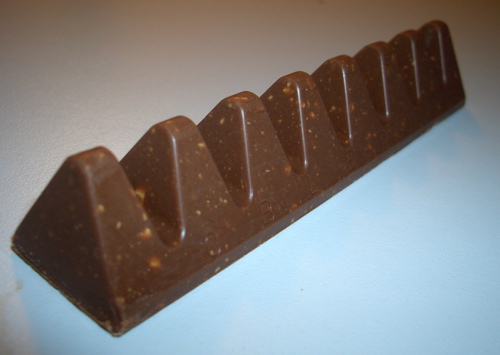
Each of these plate boundaries will always have associated process of volcanoes and earthquakes. A good example is along the Mediterranean sea, what type of plate boundary is it and what plates are found there. But what are the associated landforms with their volcanic and seismic activities - the Alps mountain range (see France, Italy, Switzerland and Austria) are young fold mountains caused by two plates rucking or folding up - further proof - Leonardo da Vinci found fossilised sea creatures in the Alps - imagine you playing with your Mother's table cloth - push opposite sides of the cloth together - you get get folds, these are the Alps (to remind yourself of the Alps - think of the A shape of Toblerone, the Himalayas, the Andes, the Rockies - all forms of fold mountains caused by constructive or destructive plate margins. Back to our example of the Mediterranean, there are many volcanoes is Italy and extinct ones in France - one is even mentioned in an advert for bottled French water. There have been recent earthquake in Italy, where the Italian Prime Minister said to the survivors, "It was a bit like camping" as they lived under canvas.
As with examples, make notes on card indexes.
What landforms are associated plate boundaries - write these down on a card index with examples. I have mentioned one above.
Rift Valleys - a large elongated depression with steep walls formed by the downward displacement of a block of the earth's surface between nearly parallel faults or fault systems - eg the one in east Africa (Kenya), the Great Rift Valley.
Ocean Ridges - A mid-ocean ridge is an underwater mountain range, typically having a valley known as a rift running along its spine, formed by plate tectonics - a famous one is found down the middle of the Atlantic ocean.
Deep Sea Trenches - more or less the opposite of the Ocean Ridge - hemispheric-scale long but narrow topographic depressions of the sea floor. They are also the deepest parts of the ocean floor.
Island Arcs or archipelago - an archipelago is a chain or cluster of islands that are formed tectonically.
Hot Spots - apart from the Rock in Cirencester - include the Hawaiian islands in the Pacific ocean - where the TV series Lost was filmed. Just imagine them as zits on a face where they have leaked pus and hardened to form islands. Just don't put that down on your exam.
Vulcanicity
Lava or molten rock is similar to vomit - bear with me on this, it should make you remember, even if it is gross - if you have a lot of gas in your stomach and you try to hold your vomit in whilst running for the loo, the result is normally quite explosive - similar to volcanoes. Lava with a lot of gas or under a lot of pressure will suddenly be very explosive. However if you dribble vomit out of the corner of your mouth whilst you are asleep, you will get a slow and slightly hardening stream of vomit from mouth onto the bed or carpet, wherever you are sleeping. This article explains it with better terminology, which if you use will give you better marks. More material to get rid of, as in a destructive plate margin, will normally lead to higher pressure of molten material to get rid of - hence a more explosive type of lava. There are always execeptions to the rule.
Minor Forms of Extrusive Activity - refers to the mode of igneous volcanic rock formation in which hot magma from inside the Earth flows out (extrudes) onto the surface as lava or explodes violently into the atmosphere to fall back as pyroclastics (hot stones and ash). These include:
Geyser - Not a bloke on Saturday night - A geyser is a spring characterized by intermittent discharge of water ejected turbulently and accompanied by a vapour phase (steam). Generally all geyser field sites are located near active volcanic areas, and the geyser effect is due to the proximity of magma. Generally, surface water works its way down to an average depth of around 2,000 metres (6,600 ft) where it contacts hot rocks. Examples of geysers in Iceland are used for geothermal energy production. Old Faithful in Yellowstone National Park is a famous one and hides a super volcano under it.
Hot Springs - and not Hope springs eternal - A hot spring is a spring that is produced by the emergence of geothermally heated groundwater from the Earth's crust. Also used in geothermal energy production in Iceland.
Boiling Mud - found near geysers and hot springs and for similar reasons.
Major Forms of Extrusive Activity - unsurprisingly are volcanoes - a good web page that needs reviewing is found here.
As for your case studies - you will need to review your ones from class, make notes on them on your index cards and include who, where, what, why, when and how.
Destructive, constructive and conservative plate margins. Processes: seismicity and vulcanicity.
Associated landforms: young fold mountains, rift valleys, ocean ridges, deep sea trenches and island arcs.
Hot spots associated with plumes of magma and their relationship to plate movement, and altitude.
So last time, we looked at the theory of plate tectonics and, off the top of your head name three major plates and three minor plates with their locations. So this time we look at what happens when two or more of these plates hit, slide or dodge past each other. The name of the type of boundary gives the game away:
Plate Margin - a diagram shown here whether they are destructive, constructive or conservative shows three of the plate boundaries - but it doesn't give them the boundary names as given by the AQA board. So take time and three index cards, draw and fully label those plate boundaries. You will need to memorise these to illustrate your exam answer.

Each of these plate boundaries will always have associated process of volcanoes and earthquakes. A good example is along the Mediterranean sea, what type of plate boundary is it and what plates are found there. But what are the associated landforms with their volcanic and seismic activities - the Alps mountain range (see France, Italy, Switzerland and Austria) are young fold mountains caused by two plates rucking or folding up - further proof - Leonardo da Vinci found fossilised sea creatures in the Alps - imagine you playing with your Mother's table cloth - push opposite sides of the cloth together - you get get folds, these are the Alps (to remind yourself of the Alps - think of the A shape of Toblerone, the Himalayas, the Andes, the Rockies - all forms of fold mountains caused by constructive or destructive plate margins. Back to our example of the Mediterranean, there are many volcanoes is Italy and extinct ones in France - one is even mentioned in an advert for bottled French water. There have been recent earthquake in Italy, where the Italian Prime Minister said to the survivors, "It was a bit like camping" as they lived under canvas.

As with examples, make notes on card indexes.
What landforms are associated plate boundaries - write these down on a card index with examples. I have mentioned one above.
Rift Valleys - a large elongated depression with steep walls formed by the downward displacement of a block of the earth's surface between nearly parallel faults or fault systems - eg the one in east Africa (Kenya), the Great Rift Valley.
Ocean Ridges - A mid-ocean ridge is an underwater mountain range, typically having a valley known as a rift running along its spine, formed by plate tectonics - a famous one is found down the middle of the Atlantic ocean.
Deep Sea Trenches - more or less the opposite of the Ocean Ridge - hemispheric-scale long but narrow topographic depressions of the sea floor. They are also the deepest parts of the ocean floor.
Island Arcs or archipelago - an archipelago is a chain or cluster of islands that are formed tectonically.
Hot Spots - apart from the Rock in Cirencester - include the Hawaiian islands in the Pacific ocean - where the TV series Lost was filmed. Just imagine them as zits on a face where they have leaked pus and hardened to form islands. Just don't put that down on your exam.
Vulcanicity
Lava or molten rock is similar to vomit - bear with me on this, it should make you remember, even if it is gross - if you have a lot of gas in your stomach and you try to hold your vomit in whilst running for the loo, the result is normally quite explosive - similar to volcanoes. Lava with a lot of gas or under a lot of pressure will suddenly be very explosive. However if you dribble vomit out of the corner of your mouth whilst you are asleep, you will get a slow and slightly hardening stream of vomit from mouth onto the bed or carpet, wherever you are sleeping. This article explains it with better terminology, which if you use will give you better marks. More material to get rid of, as in a destructive plate margin, will normally lead to higher pressure of molten material to get rid of - hence a more explosive type of lava. There are always execeptions to the rule.
Minor Forms of Extrusive Activity - refers to the mode of igneous volcanic rock formation in which hot magma from inside the Earth flows out (extrudes) onto the surface as lava or explodes violently into the atmosphere to fall back as pyroclastics (hot stones and ash). These include:
Geyser - Not a bloke on Saturday night - A geyser is a spring characterized by intermittent discharge of water ejected turbulently and accompanied by a vapour phase (steam). Generally all geyser field sites are located near active volcanic areas, and the geyser effect is due to the proximity of magma. Generally, surface water works its way down to an average depth of around 2,000 metres (6,600 ft) where it contacts hot rocks. Examples of geysers in Iceland are used for geothermal energy production. Old Faithful in Yellowstone National Park is a famous one and hides a super volcano under it.
Hot Springs - and not Hope springs eternal - A hot spring is a spring that is produced by the emergence of geothermally heated groundwater from the Earth's crust. Also used in geothermal energy production in Iceland.
Boiling Mud - found near geysers and hot springs and for similar reasons.
Major Forms of Extrusive Activity - unsurprisingly are volcanoes - a good web page that needs reviewing is found here.
As for your case studies - you will need to review your ones from class, make notes on them on your index cards and include who, where, what, why, when and how.
Monday, 31 May 2010
Syllabus - bugger now I have to learn something - Lesson 1 Plate Tectonics
As dictated by the powers that be in a stuffy office with a small window that lets in very little light
The Physical Options
Plate tectonics and Associated Hazards
Weather and Climate and Associated Hazards
The Human Options
World Cities
Development and Globalisation
In the words of the great meerkat, "Simples"
In a bit more detail, Plate Tectonics and associated hazards
Earth structure, plate tectonics theory: convection currents and sea-floor spreading. Evidence:
continental drift and palaeomagnetism.
Destructive, constructive and conservative plate margins. Processes: seismicity and vulcanicity.
Associated landforms: young fold mountains, rift valleys, ocean ridges, deep sea trenches and island arcs.
Hot spots associated with plumes of magma and their relationship to plate movement. and altitude.
The Earth's Structure could be compared to a Scotch Egg
However, to be more scientific, the earth's structure has many layers and an article can be found here. try to remember the mnemonic for the layers of the Earth - CMC Cool Moody Cows (Crust Mantle Core), the lower two are split into two layers. Upper and Lower Mantle and Outer and Inner Core.
Like with most things, try to remember three facts about the structure of the Earth per section. Write these on card index files. Why three? This tells you all.
Have a look at this video to remind you of the fun of the structure of the Earth.
Plate Tectonic Theory - The crust of the Earth is made up of major and minor plates from the formation of the Earth. Find out what Alfred Wegener did with plate tectonics. Here is the first video of a series of plate tectonics. Admittedly, it may be a bit boring but it will help for those facts to soak in at the end of a boring day. It is worth the long haul. Try to remember the names of three major plates and three minor plates with their locations, more if you can, whack them down on an index card.
Convection currents - imagine a pot of soup with the heat on with lumps of bread on top, the bits of bread are the plates, the soup is the upper mantle with the convectional heat patterns that move the bits of bread around. It is put more succinctly here. Also exhibited in lava lamps or in a fish tank. What are your three facts on these currents, they are not sultanas?
Sea floor spreading is a bit like the stretch marks on my stomach or if you have cut your hand, blood flows out and then a scab forms. For the technical point of view have a look here. Make yourself a coffee or dig out a can of coke out of the fridge and watch this.
Continental Drift - if you listened to the video, you would have heard of this, but what is it, before looking at wikipedia - jot down three facts on an index card about continental drift...Now have a look here and then after reading that - write three more facts on the back of the index card. A quick and non intensive video about Continental Drift is found href="http://www.youtube.com/watch?v=hSdlQ8x7cuk">here.
Finally, palaeomagnetism - already mentioned once again in the Discovery Channel video - big bloody word, but what does it mean? Palaeo=geologically old and Magnetism=well I am sure you know that one. Now where can you find evidence of this palaeomagnetism? Dig out the cards and write three facts on the index card, then read here, then three more new facts.
Prepare yourself for next time with this.
The Physical Options
Plate tectonics and Associated Hazards
Weather and Climate and Associated Hazards
The Human Options
World Cities
Development and Globalisation
In the words of the great meerkat, "Simples"
In a bit more detail, Plate Tectonics and associated hazards
Earth structure, plate tectonics theory: convection currents and sea-floor spreading. Evidence:
continental drift and palaeomagnetism.
Destructive, constructive and conservative plate margins. Processes: seismicity and vulcanicity.
Associated landforms: young fold mountains, rift valleys, ocean ridges, deep sea trenches and island arcs.
Hot spots associated with plumes of magma and their relationship to plate movement. and altitude.
The Earth's Structure could be compared to a Scotch Egg
However, to be more scientific, the earth's structure has many layers and an article can be found here. try to remember the mnemonic for the layers of the Earth - CMC Cool Moody Cows (Crust Mantle Core), the lower two are split into two layers. Upper and Lower Mantle and Outer and Inner Core.
Like with most things, try to remember three facts about the structure of the Earth per section. Write these on card index files. Why three? This tells you all.
Have a look at this video to remind you of the fun of the structure of the Earth.
Plate Tectonic Theory - The crust of the Earth is made up of major and minor plates from the formation of the Earth. Find out what Alfred Wegener did with plate tectonics. Here is the first video of a series of plate tectonics. Admittedly, it may be a bit boring but it will help for those facts to soak in at the end of a boring day. It is worth the long haul. Try to remember the names of three major plates and three minor plates with their locations, more if you can, whack them down on an index card.
Convection currents - imagine a pot of soup with the heat on with lumps of bread on top, the bits of bread are the plates, the soup is the upper mantle with the convectional heat patterns that move the bits of bread around. It is put more succinctly here. Also exhibited in lava lamps or in a fish tank. What are your three facts on these currents, they are not sultanas?
Sea floor spreading is a bit like the stretch marks on my stomach or if you have cut your hand, blood flows out and then a scab forms. For the technical point of view have a look here. Make yourself a coffee or dig out a can of coke out of the fridge and watch this.
Continental Drift - if you listened to the video, you would have heard of this, but what is it, before looking at wikipedia - jot down three facts on an index card about continental drift...Now have a look here and then after reading that - write three more facts on the back of the index card. A quick and non intensive video about Continental Drift is found href="http://www.youtube.com/watch?v=hSdlQ8x7cuk">here.
Finally, palaeomagnetism - already mentioned once again in the Discovery Channel video - big bloody word, but what does it mean? Palaeo=geologically old and Magnetism=well I am sure you know that one. Now where can you find evidence of this palaeomagnetism? Dig out the cards and write three facts on the index card, then read here, then three more new facts.
Prepare yourself for next time with this.
Subscribe to:
Comments (Atom)